Finding the galaxy behind the flash
Fast radio bursts last only milliseconds, but a well-localized burst can point astronomers toward the environment that produced it. An October 8 ESA/Webb release reports that the telescope identified the host of FRB 20240304B, detected by the MeerTRAP team with MeerKAT on March 4, 2024.
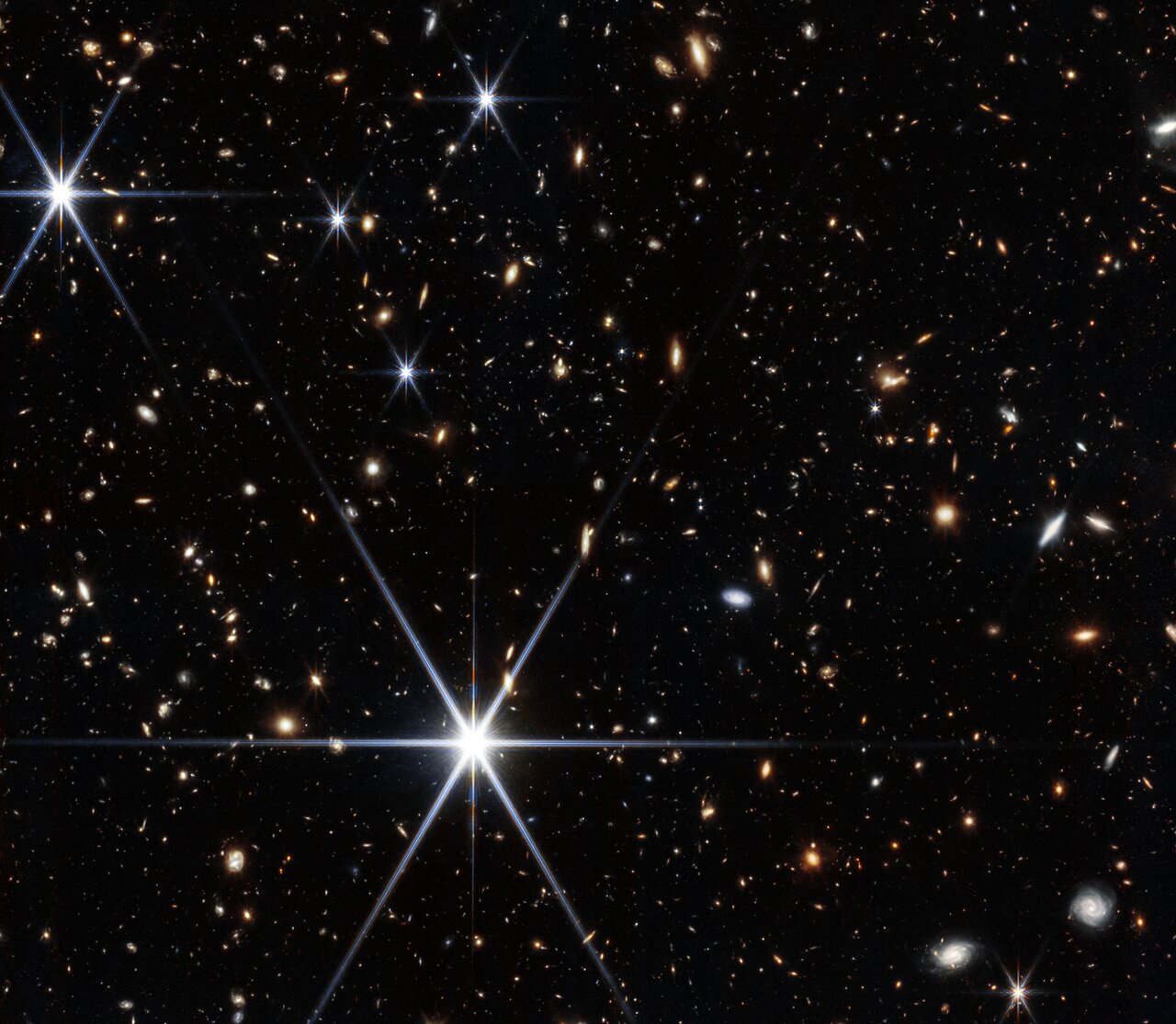
Webb’s infrared camera found the faint host, and its NIRSpec instrument measured a redshift of 2.148. The release places the galaxy at a time when the universe was about three billion years old and describes this as the most distant fast radio burst identified at the time.
Why the host’s age matters
The host is a small galaxy actively forming stars. The researchers infer that much of its stellar population may have formed within roughly 30 million years. That short history makes a mechanism requiring a long wait less comfortable as an explanation for this particular event.
A young, highly magnetized neutron star—a magnetar—is one plausible route. An alternative involving two neutron stars gradually spiraling together can require a much longer timescale. The team therefore interprets the host as evidence favoring a young magnetar origin for this burst.
A clue with a boundary
The distinction between identifying a host and identifying the engine is important. Webb measured the galaxy’s properties; the connection to a magnetar is an interpretation of those properties and the radio event.
The finding strengthens one explanation without establishing a universal answer for all fast radio bursts. Additional distant hosts will allow researchers to test whether the same relationship recurs across different environments. The published infrared image shows the field around the host, not a photograph of the brief radio emission.
behind the story
sources & further reading
- Webb measures distance to farthest fast radio burst, suggesting origin
ESA / Webb · Observatory release · Accessed Oct 22, 2026
- FRB 20240304B: NIRCam image and filters
ESA / Webb · Image record · Accessed Oct 22, 2026
Prepared with AI assistance and checked against the linked sources. This is a synthesis of published material; we did not conduct the underlying research or interview its authors.
Suggest a correction