A departure, not yet a return
JAXA’s Martian Moons eXploration spacecraft launched from Japan’s Tanegashima Space Center on an H3 rocket at 04:41 JST on October 20. For readers in the United States, the launch fell on October 19. JAXA’s mission record and ESA’s launch report confirm the departure.
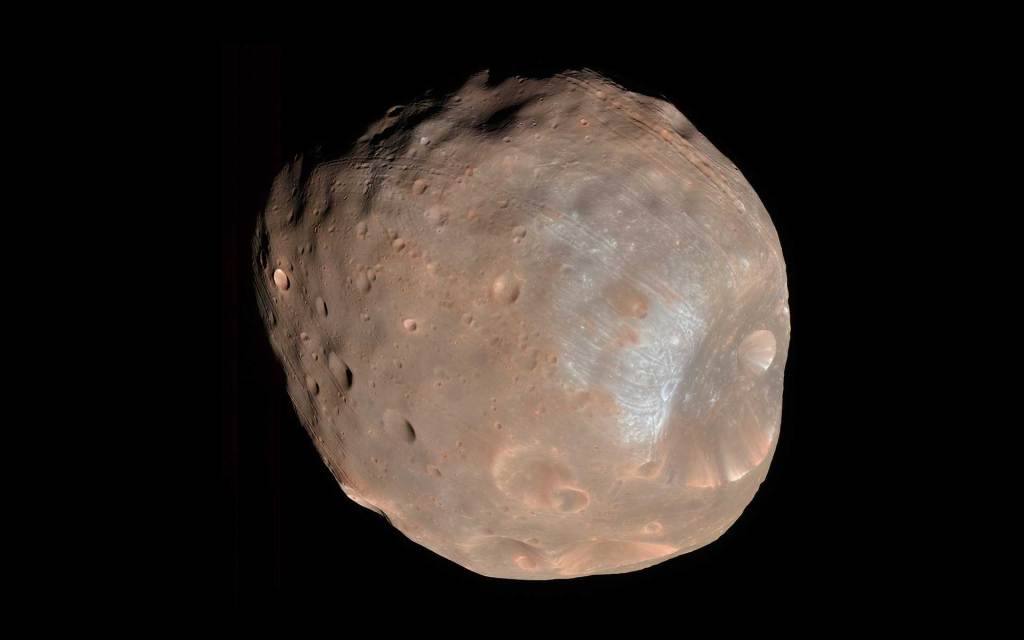
The spacecraft will investigate both Phobos and Deimos, with a plan to collect material from Phobos and return it to Earth. A successful sample return would bring material from the Martian system into laboratories for close study.
Two different origin stories
The mission addresses a basic uncertainty: were the moons captured asteroids, or did they form from debris thrown into orbit by a large impact on Mars? NASA says measurements of their composition and analysis of returned samples could help distinguish these explanations.
NASA’s MEGANE instrument will measure gamma rays and neutrons to investigate elemental composition. A pneumatic sampler will complement Japan’s coring sampler, while deep-space communications networks support the mission. ESA also provides communications equipment, ground-station support and scientific participation.
The next milestones
NASA’s mission overview gives 2027 as the planned Mars arrival, with sample collection no earlier than 2028 and a return to Earth in 2031. Those dates describe the intended mission sequence and can change as operations progress.
For now, the verified milestone is launch. The major scientific payoff depends on the spacecraft reaching Mars, characterizing the moons, selecting a site and completing the demanding round trip. Each stage will provide a more useful measure of progress than treating the sample return as already achieved.
behind the story
sources & further reading
- Martian Moons eXploration mission record
JAXA / ISAS · Mission record · Accessed Oct 22, 2026
- MMX lifts off to Mars’s moon Phobos
ESA · Launch confirmation · Accessed Oct 22, 2026
- NASA’s contributions to MMX
NASA · Mission overview · Accessed Oct 22, 2026
Prepared with AI assistance and checked against the linked sources. This is a synthesis of published material; we did not conduct the underlying research or interview its authors.
Suggest a correction